

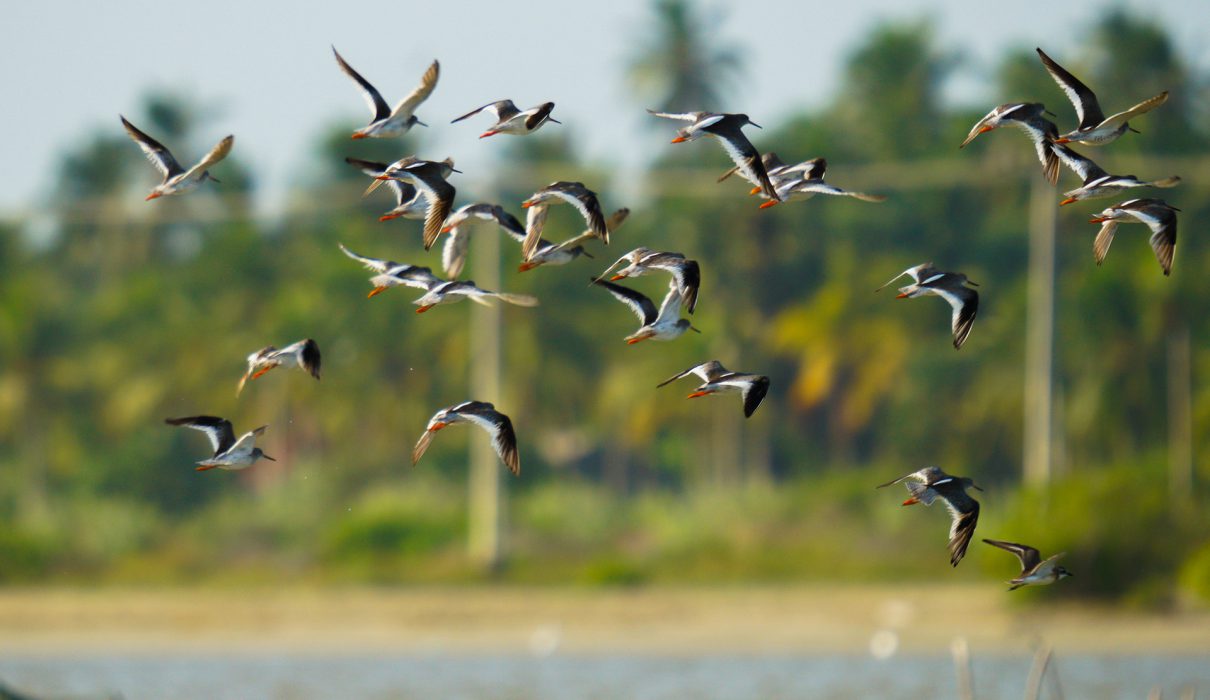
When most people talk about wildlife travel in Sri Lanka, they mention Yala, Wilpattu or the misty hill country. For me, there is another place that quietly stands apart: Mannar Island. It feels like a different world inside Sri Lanka – open, flat and bright, with palmyrah palms, wetlands, wild donkeys and huge skies. On this trip I stayed at Palmyrah House, and after my experience there, Mannar became, in my heart, a true “bird island”.
First impressions of Mannar
As you approach Mannar, the landscape slowly changes. The hills disappear and the land flattens into a long, low island. On both sides of the causeway you see shallow lagoons and wetlands, with small waves moving in the wind and white birds scattered like dots across the water. The air feels salty, the sunlight is sharp and the sky looks enormous.
Coming from the Maldives, this flat island world felt strangely familiar. Mannar reminded me of a large cousin of a Maldivian island: close to sea level, always linked to water, with simple horizons and wide-open views. But Mannar has its own mood. Instead of coral sand and small islands, you see long roads, scrub land, palmyrah forests, village houses, wind turbines and groups of wild donkeys sharing the roadside with you.
Even before I reached Palmyrah House, I was already in birdwatching mode. Herons and egrets were feeding in roadside pools, waders were busy in the shallows and terns were gliding over the water. It was clear from the beginning that this island was going to be all about birds and light.
Birds at your doorstep
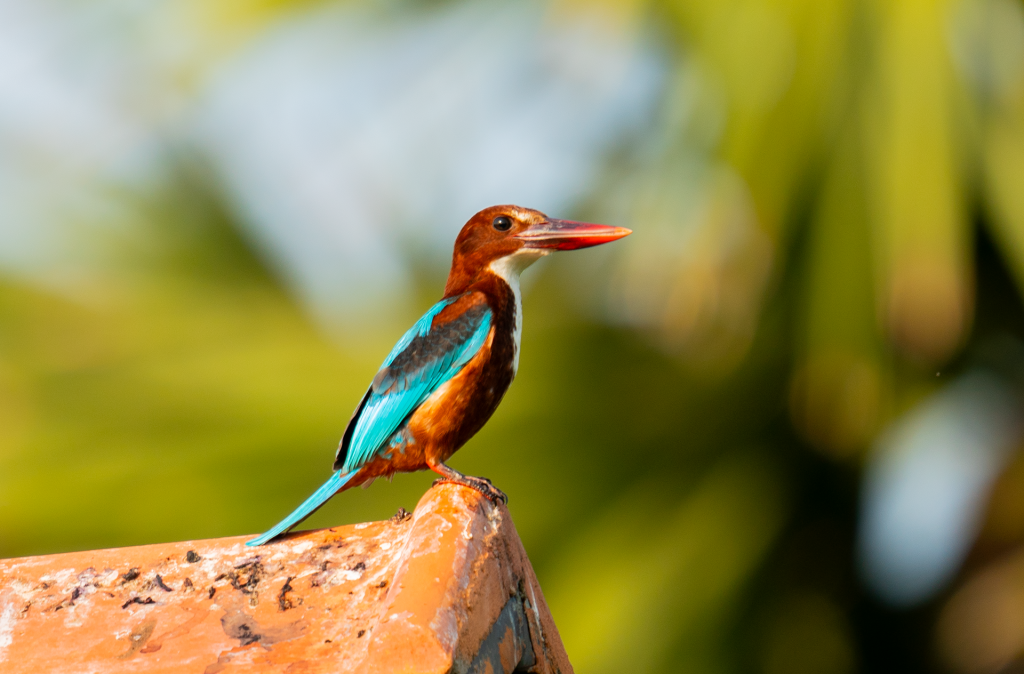
One thing I really loved about Palmyrah House is that birdwatching begins the moment you step outside your room. The hotel is surrounded by natural habitat. The water body and wetland next to the buildings attract many waterbirds, especially in the cooler parts of the day. From the garden, the verandas or near the pool, it is easy to see herons, egrets and other species feeding or resting.
As the day warms up, different birds appear. Kingfishers perch on branches or on man-made structures, watching the water below. Bee-eaters hunt small flying insects in the air, returning to favourite perches again and again. Doves, mynas and other common species move through the trees and wires around the property. Even without leaving the hotel, there is plenty to observe and photograph.
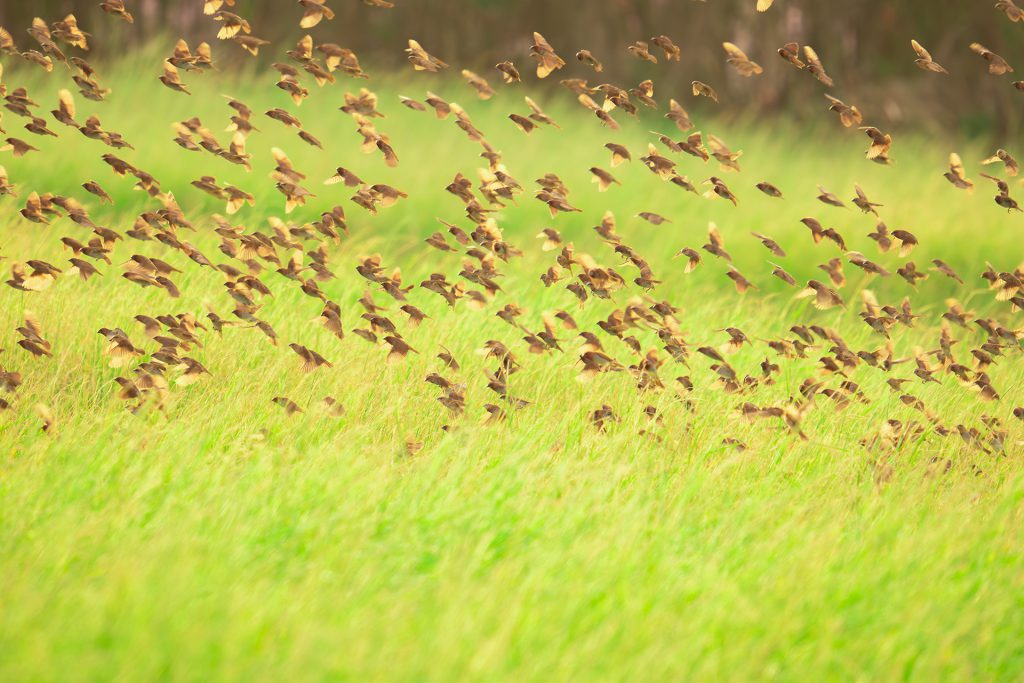
When you go a little further outside the property, the richness increases. Small tanks, seasonal ponds and open fields around Palmyrah House hold even more birdlife. During the main migration season, the wider Mannar area turns into a busy feeding ground for flamingos, pelicans, storks, ducks and many species of waders. The open flat land and shallow water create ideal conditions for watching these birds from a respectful distance.
Morning walks with the naturalist
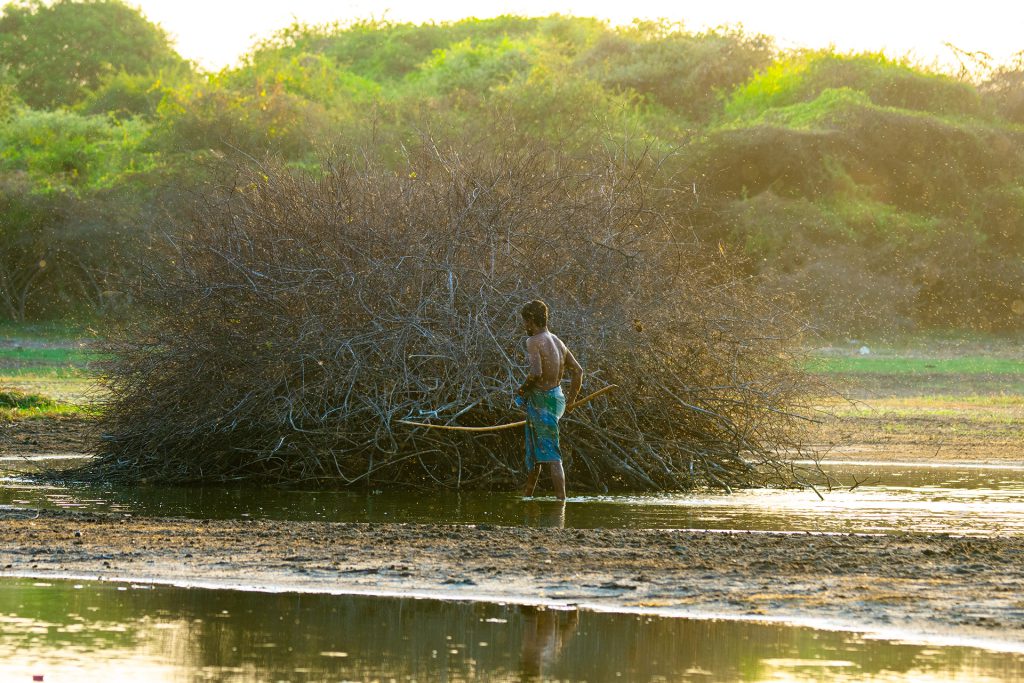
One of the best parts of my time in Mannar was walking every morning with the Palmyrah House naturalist. He has a very good character – calm, friendly and full of knowledge about birds, plants and local ecology. We would start our walks in the blue-grey light before sunrise, when the air was cool and the island was just beginning to wake.
Walking with him was like carrying a living field guide. He could identify birds first by sound, then by a quick glimpse through binoculars, and he patiently explained behaviour, seasonal movements and favourite habitats. We slowly moved around the hotel grounds and out towards nearby fields and ponds. Sometimes we stopped near the hotel wetland, sometimes beside a seasonal pool, sometimes along a small track bordered by palmyrah and scrub. Every stop brought new birds into view.
As a photographer, having a guide who understands both the species and the best times of day is a huge advantage. While he scanned the horizon and listened for calls, I could focus on composition and light. Those quiet early walks, with the soft sound of wings and water all around, are some of my favourite memories from Mannar.
Birds and bird sanctuaries – the heart of Mannar
For me, Mannar is all about birds. The entire region is part of a bigger story: it sits on the Central Asian Flyway, an important route used by migratory birds that move between their northern breeding grounds and their southern wintering areas. Mannar’s lagoons, tidal flats and wetlands are crucial feeding and resting places on that long journey. LinkedIn+1
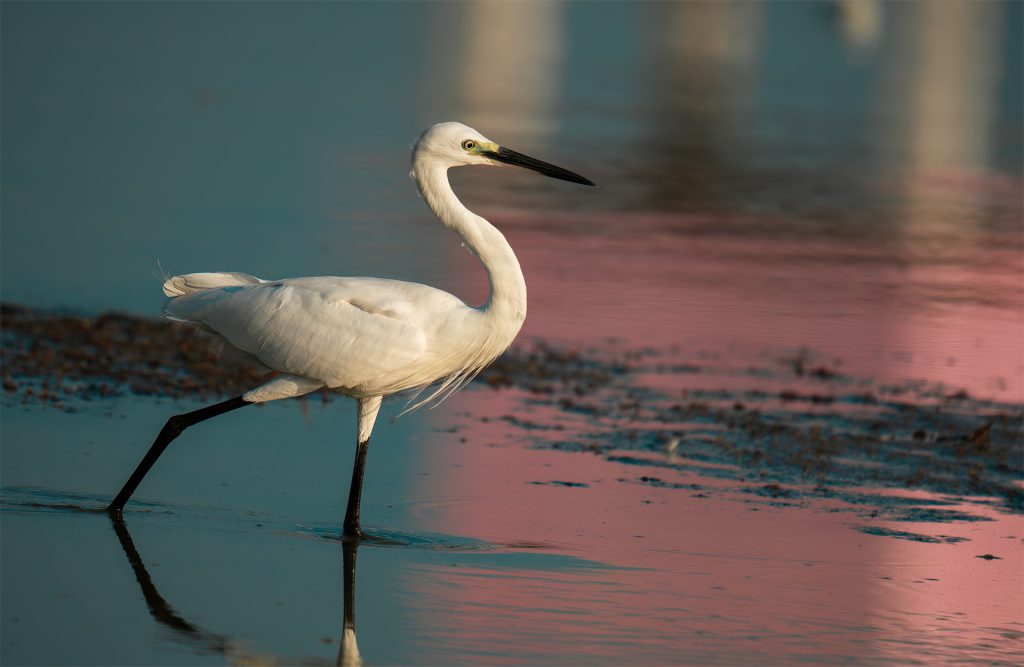
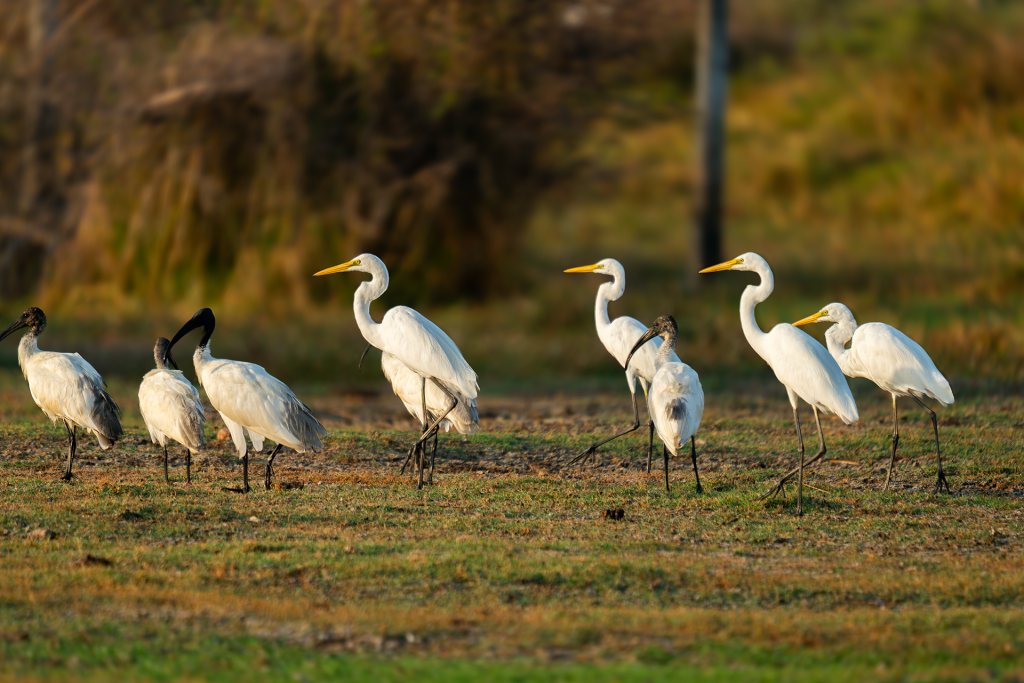
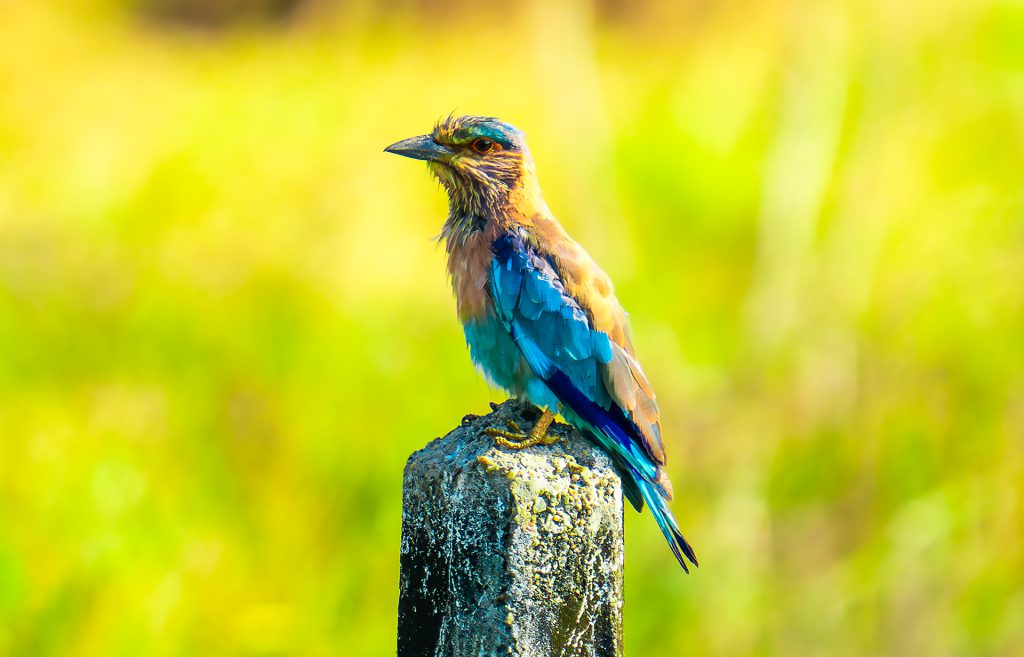
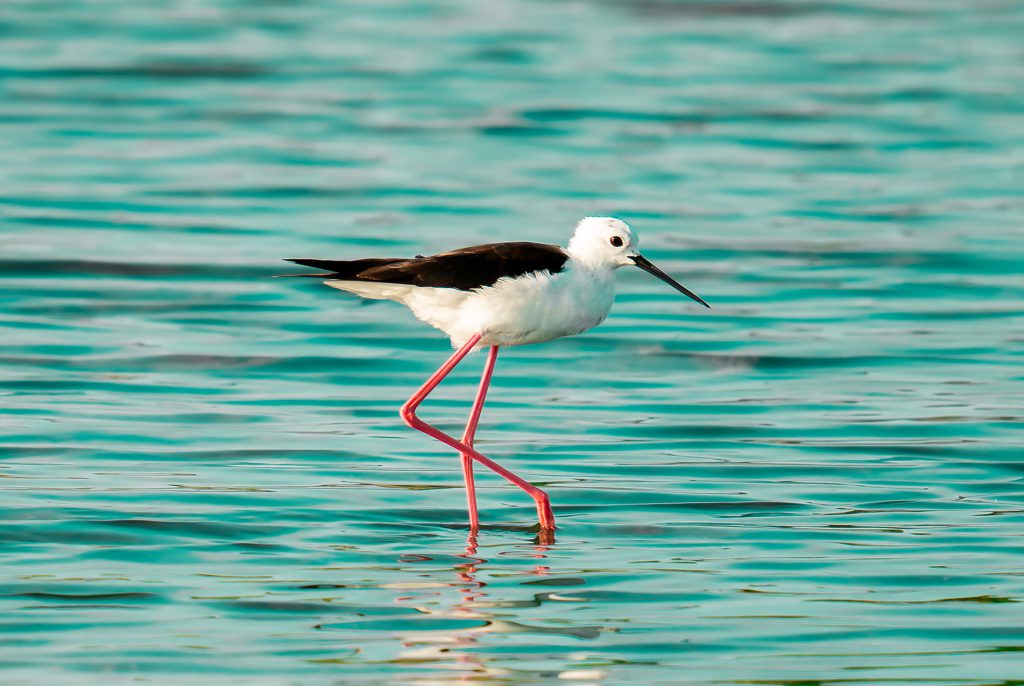
Just a short drive from Palmyrah House, you reach one of the most important bird areas in Sri Lanka: the Mannar Bird Sanctuary, also known as Vankalai Sanctuary or Vankalai Lagoon. This protected wetland covers almost 4,800 hectares and includes mangroves, salt marshes, lagoons, waterholes, grasslands and patches of scrub. It was declared a wildlife sanctuary in 2008 and recognised in 2010 as a Ramsar site – an internationally important wetland for waterbirds. Lakpura®+2Sustainable Development Goals+2
Standing at Vankalai during the migratory season is an unforgettable experience. Flocks of greater flamingos spread out across the shallow water, their pink and white bodies reflected in the calm surface. Behind them, lines of pelicans, storks, ducks and smaller waders paint moving patterns over the lagoons. Local surveys estimate that more than 20,000 waterbirds use this sanctuary during the migration period, and around 150 bird species have been recorded here, including several rare migrants. Ramsar Sites Information Service+1
Some of the special birds associated with Mannar and Vankalai include greater flamingos, various pintail and other ducks, spot-billed and comb ducks, bar-tailed and black-tailed godwits, Eurasian wigeon, avocets, sandpipers, plovers, terns and many others that birders travel long distances to see. Wikipedia+3safarisrilanka.com+3birdsoflanka.com+3 During the main season, roughly between November and March, the sanctuary becomes a living tapestry of wings and calls. serendipityretreats.com+1
For a visitor staying at Palmyrah House, it is easy to reach these bird sanctuaries and also explore other wetlands across Mannar Island and the nearby mainland. Even along the causeway between the mainland and the island, you can stop and watch flamingos, egrets, herons and other species feeding in the tidal flats on both sides. At the right water level, the entire drive itself becomes a moving hide, with birds close enough for both binoculars and cameras.
What impressed me most is how seamlessly birds are integrated into every part of life here. You see them from the hotel garden, from the road, from the small bridges and from the shore. Mannar is not a place where you see wildlife only inside fenced parks. The whole island, in many ways, feels like one big, open bird sanctuary.
Dragonflies and the quiet work of mosquito control
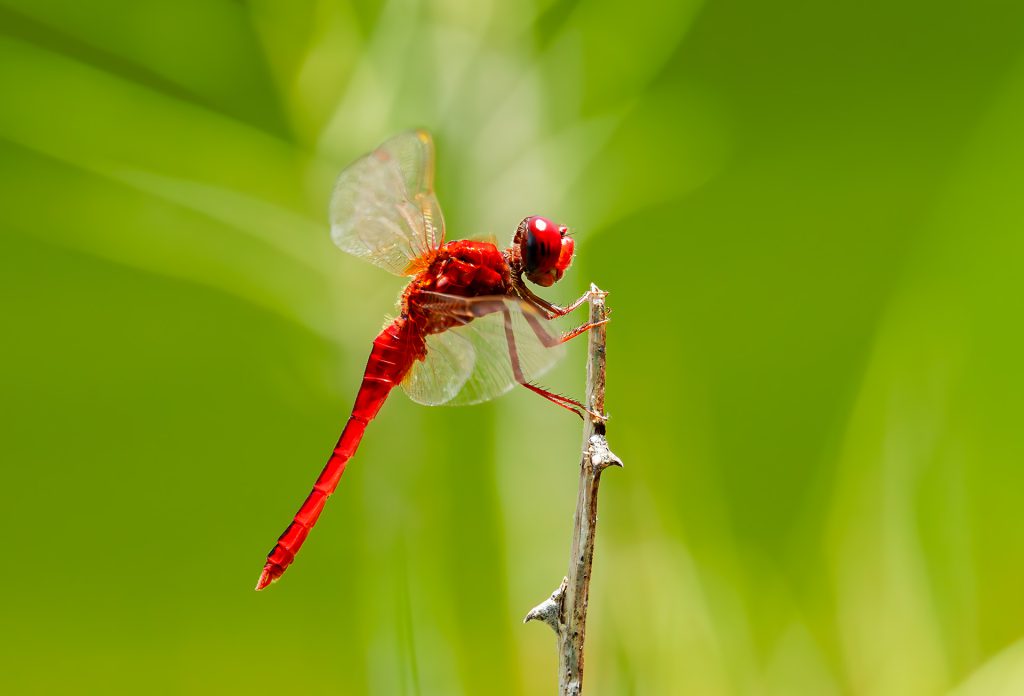
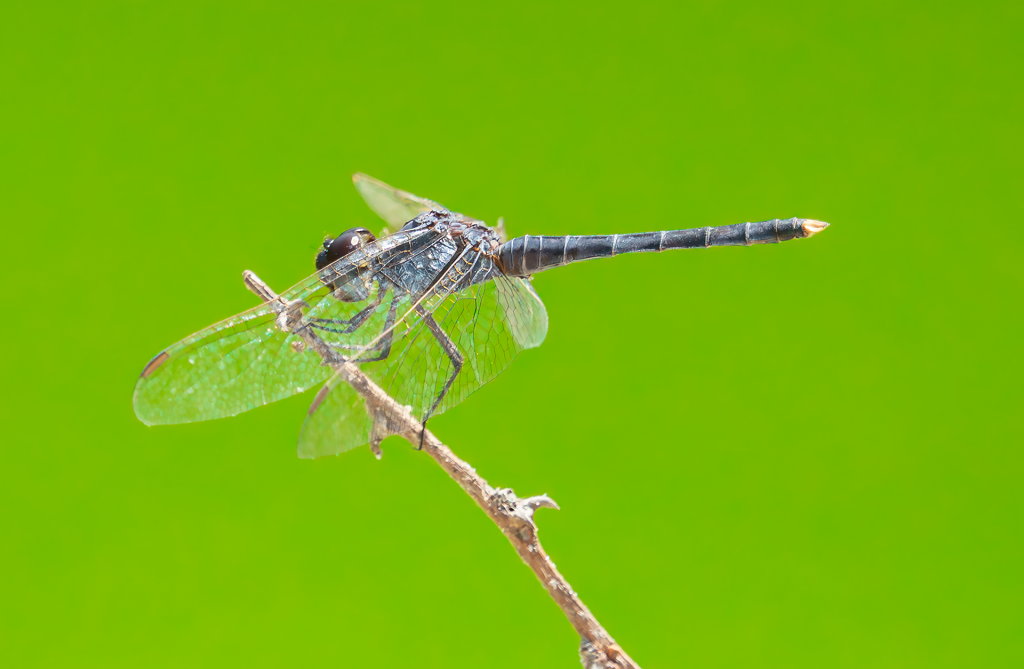
There is another small detail from Palmyrah House that I still talk about. For a landscape full of wetlands and water bodies, I expected mosquitoes to be a constant problem. Instead, mosquitoes were surprisingly rare around the area where I stayed, especially near the pool.
The reason, at least from what I observed, seemed to be dragonflies. Around the hotel’s pool and water body there was a strong population of dragonflies constantly on patrol. They hovered above the water like tiny helicopters, chased each other, and made sudden quick dives and turns. Dragonflies are known hunters of mosquitoes, feeding on both larvae in the water and adults in the air.
During my stay I personally saw and photographed five different dragonfly species within the Palmyrah House grounds, mainly around the pool and wetland area. In the soft afternoon light they were everywhere, catching the sun on their wings. For me, this was another sign that the ecosystem around the hotel is healthy. Instead of relying only on chemicals, there is a natural balance where predators like dragonflies keep mosquito numbers lower. As a guest, this made the evenings more comfortable, and as a photographer it gave me another beautiful group of animals to capture.
A flat island with big skies
The physical shape of Mannar is simple but powerful. The island is almost completely flat, with only gentle rises and no real hills. This creates a landscape of big skies and long, clean horizons. At sunrise, the first light spreads in a low band of colour across the east, gradually lifting to reveal birds feeding in the shallows. At sunset, the western sky turns gold and orange, and silhouettes of flamingos, palmyrah palms, wind turbines and donkeys stand out like cut shapes against the bright background.
For someone used to the Maldives, this flatness feels familiar and comforting. It is a landscape where the sky takes up more of the view than the land, where the colours of dawn and dusk feel very close, and where the sea is never far away, even if you cannot always see it.
Palmyrah and coconut palms
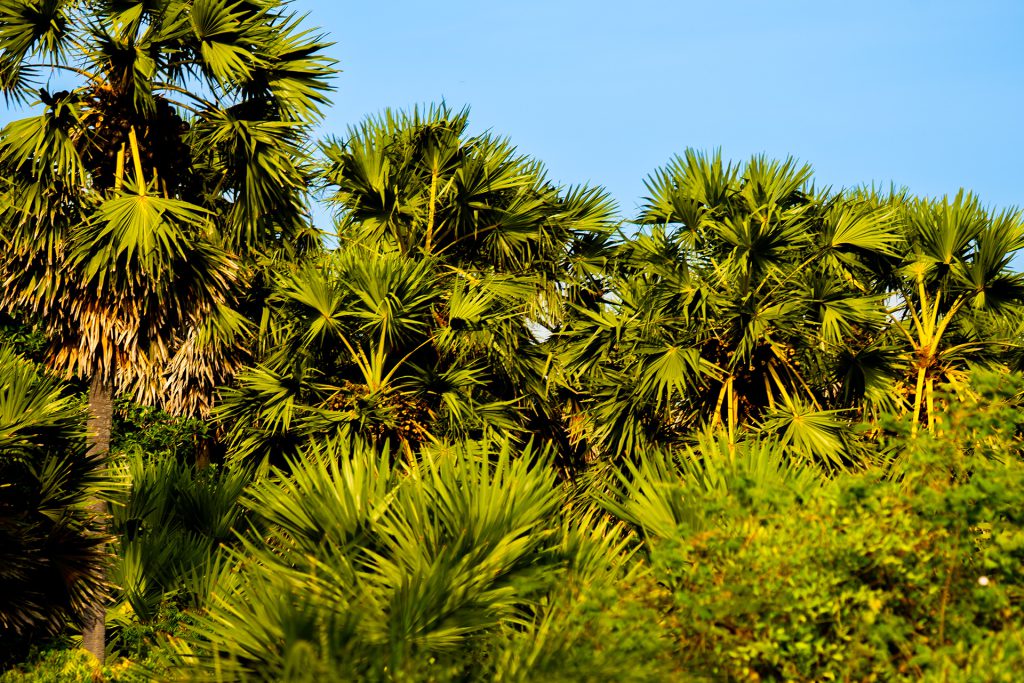
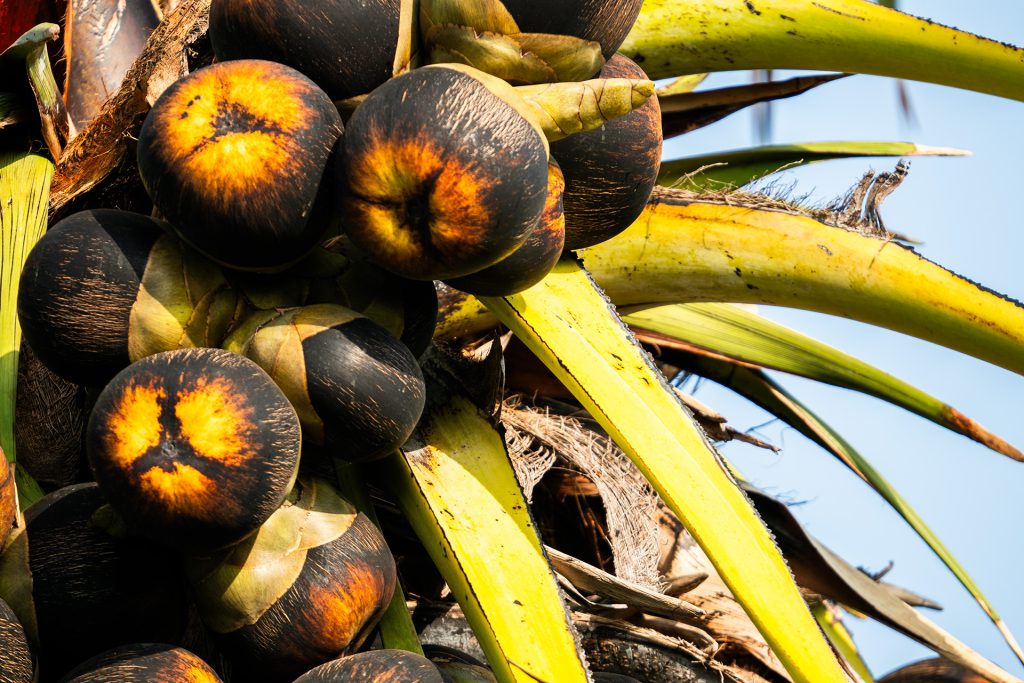
Two tree species define the silhouette of Mannar: the palmyrah and the coconut. The palmyrah palm, with its tall straight trunk and fan-shaped leaves, dominates much of the island. Entire stretches of road are lined with palmyrah on both sides, giving a very distinct northern Sri Lankan character to the scenery. Locally, this tree is deeply important, providing food products, fibre, materials and traditional crafts.
Coconut palms also appear across the island, especially near villages and along some stretches of the coast. For a Maldivian visitor, the sight of coconut trees against the light brings a feeling of home, but the presence of tall palmyrah palms alongside them reminds you that this is a different culture and landscape, with its own history and traditions.
Wild donkeys in the open landscape
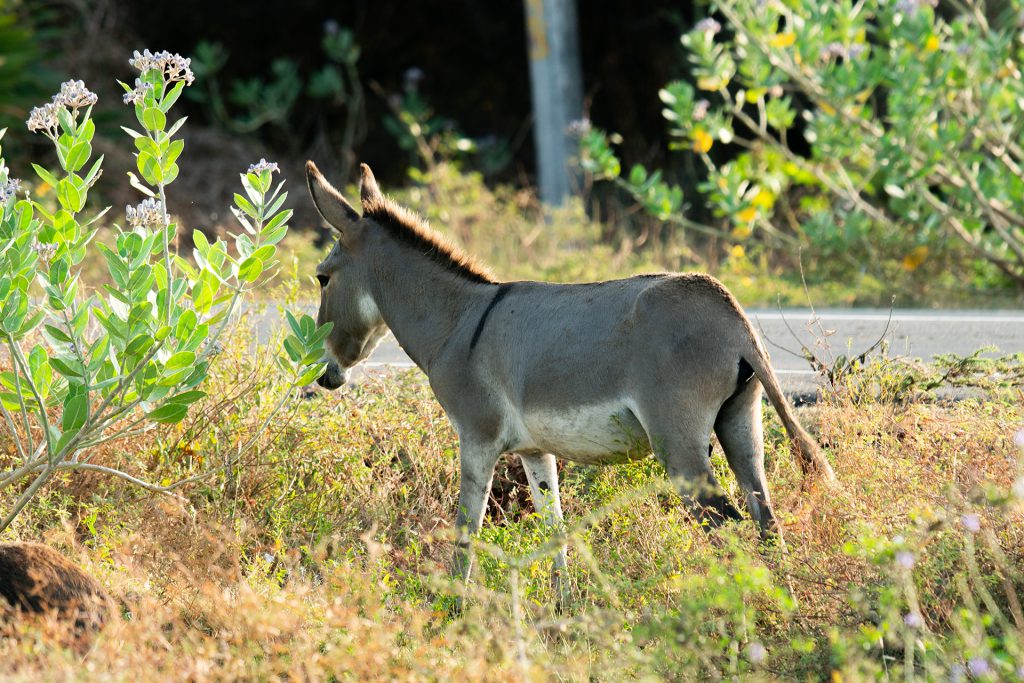
Mannar is also known for its wild donkeys, which are descendants of animals used in past centuries for transport and labour. Today they move freely across the island and have become part of Mannar’s identity. You can see them grazing near lagoons, wandering along roads, resting in open fields or standing in groups under sparse trees.
Their soft grey and brown colours blend beautifully with the dry earth and scrub, and they make excellent subjects for photography, especially in low light. Watching a group of donkeys walking quietly across an empty road at sunset, with the sky glowing behind them, is a very peaceful experience. It also adds to the feeling that Mannar is a place where wildlife and human life still share space in a relatively low-conflict way.
The ancient baobab tree
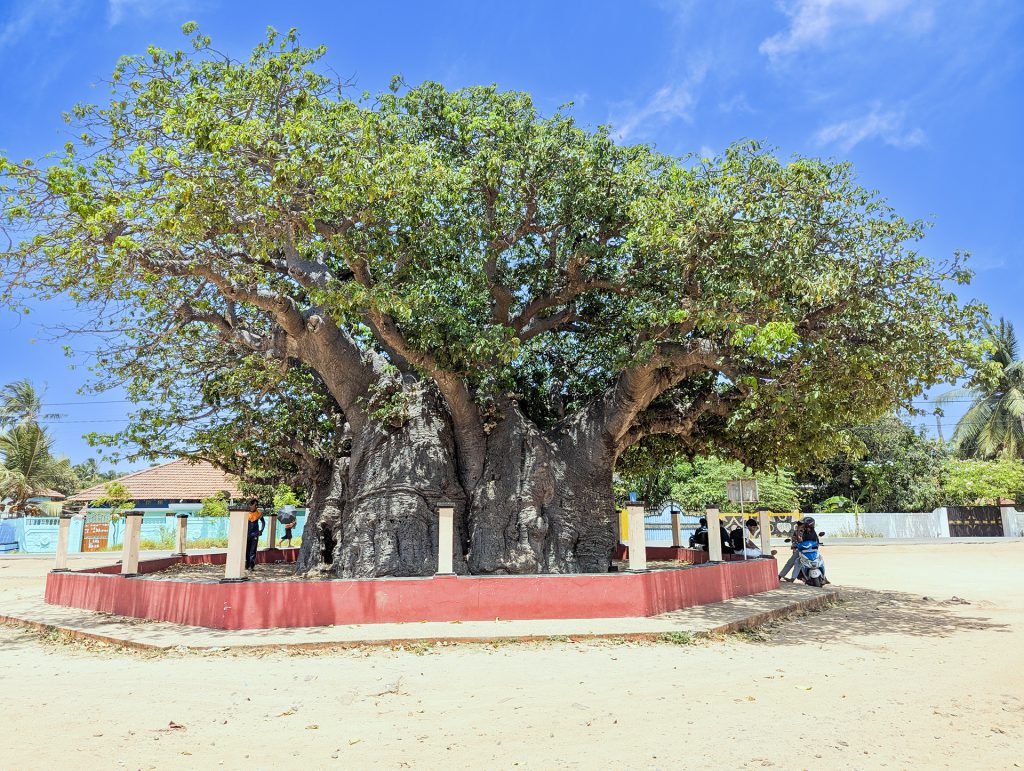
Another unique landmark of Mannar is its famous baobab tree, believed to be several centuries old. Baobabs come from Africa and nearby regions, and it is thought that seeds were brought here long ago by traders who sailed across the Indian Ocean. Standing in front of this massive tree, with its wide bottle-shaped trunk and twisting branches, you can feel the weight of history and the deep connections between Sri Lanka and the wider region.
The baobab is impressive at any time of day, but during the golden hours its bark and structure really come alive. A wide-angle lens is ideal to capture the whole tree, and including a person in the frame shows just how huge it is.
Wind turbines and modern Mannar
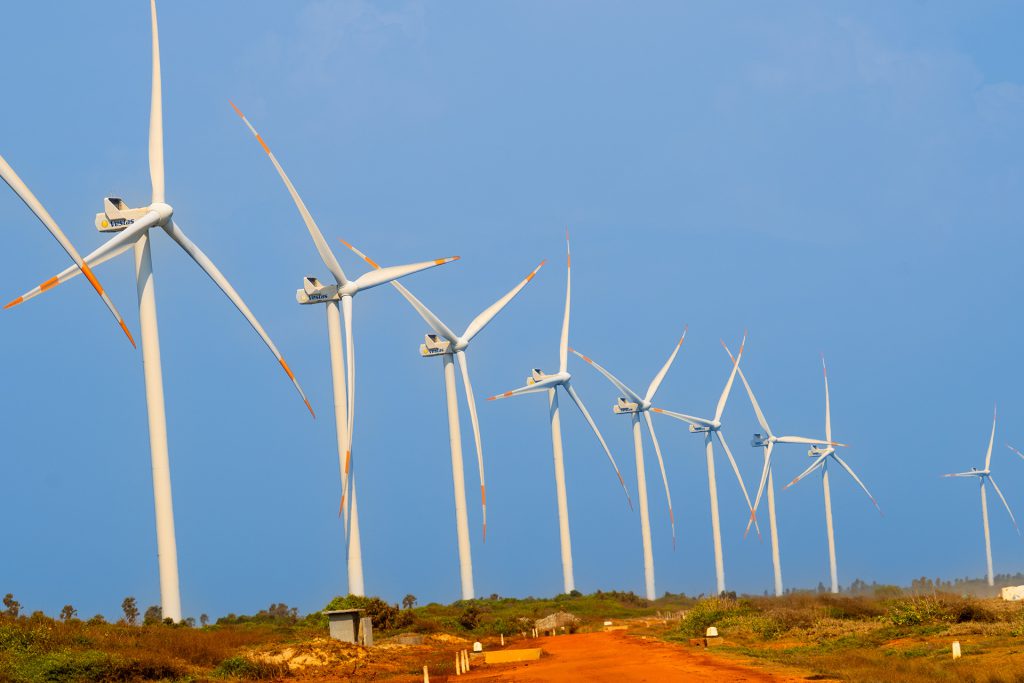
On one side of the island, a new kind of giant stands over the water and flat land: the wind farm. Rows of tall white turbines slowly turn in the coastal wind, converting the constant breeze into electricity. These modern structures create an interesting contrast with the ancient baobab, the traditional palmyrah palms and the timeless wetlands.
From a photographic point of view, the wind turbines are very graphic. Their clean lines and repeated shapes look striking against a deep blue sky or a colourful sunset. Sometimes I framed them together with flocks of birds, showing both the natural and modern sides of Mannar in a single image. They are a reminder that even in a place that feels timeless, new layers of story are being added every year.
Why Mannar stays with me
When I think of Mannar now, I remember soft footsteps on early-morning walks with the Palmyrah House naturalist; the first calls of birds floating over still water; dragonflies hunting above the pool; the quiet movement of wild donkeys across the road; the silhouettes of palmyrah palms and wind turbines against a burning sky; and, most of all, the endless flocks of birds feeding and resting in the lagoons and sanctuary.
Mannar is not a loud destination. It does not shout with big mountains or crowded cities. Instead, it speaks in the language of wings, water and wind. For me it is truly a bird island, a flat and sunlit cousin of the Maldives, with its own character, its own wildlife and its own quiet magic.
If you love birds, wide open spaces and places that feel different from the usual tourist routes, Mannar Island and Palmyrah House deserve a place on your travel map. This is a place where you can wake up with birds at your doorstep, spend the day exploring world-class bird sanctuaries and wetlands, and fall asleep under a sky full of stars, knowing that just a few kilometres away, thousands of flamingos and other migrants are resting on their long journey across the world.
I also want to take a moment to appreciate all the people who helped make this entire trip possible and comfortable, not only in Mannar but across Sri Lanka during our ten days of travelling. From the hotel staff and management in every place we stayed, we always felt genuinely welcomed and cared for, and that warmth is a big reason Sri Lanka feels like a second home to me. In Mannar, I am especially grateful to Palmyrah House – to the managers, all the staff, and their wonderful naturalist – for turning my stay into something truly special. The management and front office were always ready to help with any request, the restaurant staff adjusted meal times for our early birdwatching starts and late returns, and the naturalist generously shared his deep knowledge of birds and local ecosystems on our morning walks, with a very friendly and humble character. The most important part of a long road journey, however, is always the driver, and for this I am deeply grateful to our travel agent Lanka Memo and their team – especially Arshad, Hasni and Aslam. They spent many long hours driving us safely across the country, from busy towns to quiet wetlands and remote parks, always with patience, good humour and great care for my family. They helped with timing, local arrangements, tea breaks, photo stops and a thousand small details that made everything smoother. Thanks to all of them, I could focus on wildlife, photography and enjoying the landscapes, knowing that the driving, logistics and daily comfort of the trip were in very safe and trustworthy hands.

