

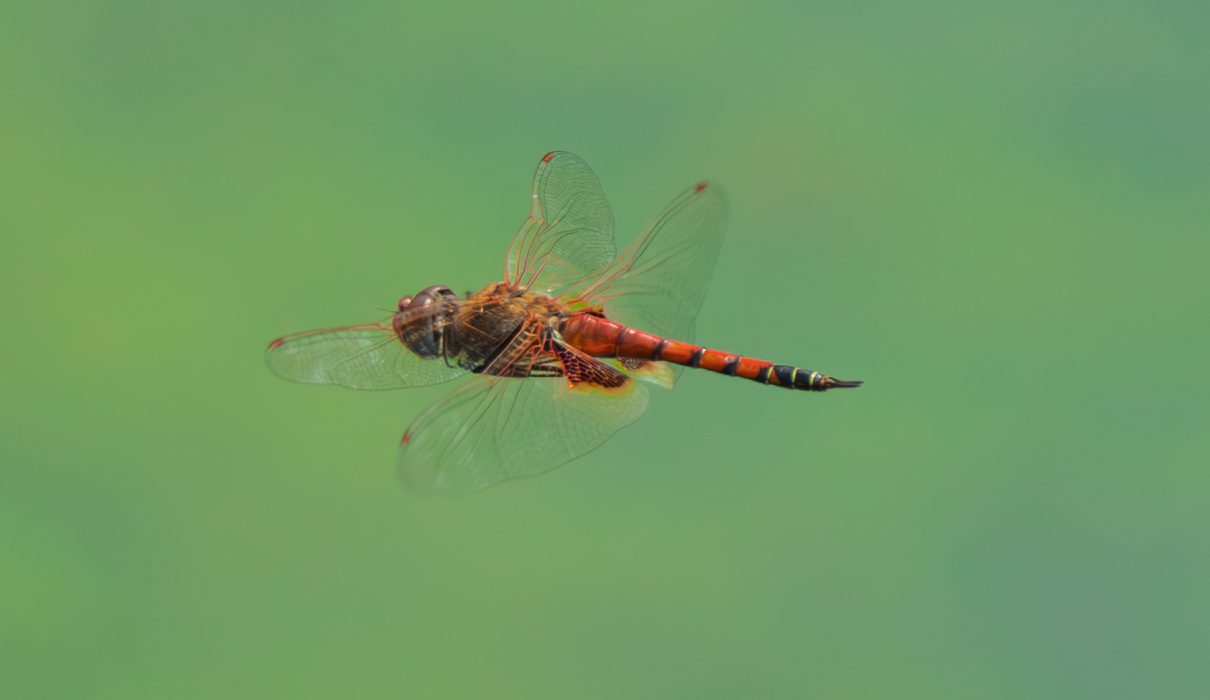
Introduction
Photographing dragonflies in flight is widely considered one of the most technically demanding areas of wildlife photography. Unlike birds, which often follow predictable trajectories, dragonflies exhibit rapid directional changes, abrupt hovering, and highly erratic motion patterns. Their small size, combined with extremely fast wing movement, creates a situation where both autofocus systems and human reaction time are pushed to their limits.
This article presents a field-based technical study of dragonfly flight photography conducted in the Maldives, using a second-hand Sony A7R II paired with long telephoto lenses, primarily the Sigma 150–600mm and, in some instances, a Tamron 500mm. The intention is not only to document the results but also to demonstrate what can be achieved with non-flagship equipment through observation, technique, and persistence.
Equipment and System Limitations
The Sony A7R II, while still capable of producing high-resolution images, is not designed for fast-action wildlife photography by modern standards. Its autofocus system lacks advanced subject detection, real-time tracking, and the computational enhancements found in newer cameras. The continuous shooting speed is limited to approximately five frames per second, which significantly reduces the margin for error when photographing fast-moving subjects.
The primary lens used for this work, the Sigma 150–600mm, provides the necessary reach for small subjects but introduces additional challenges. At longer focal lengths, even minor subject movement translates into large shifts within the frame. The Tamron 500mm, used in selected frames, offers slightly improved handling due to its fixed focal length but requires equally precise technique.
Given these constraints, the success of the images depends less on the camera system and more on field methodology.
Field Conditions and Behavioral Observation
All images were captured in natural wetland environments within the Maldives, typically near still or slow-moving freshwater bodies. These habitats attract dragonflies due to their breeding and feeding behavior. Light conditions varied between early morning and late afternoon, allowing for softer illumination and better control of highlights on the insects’ reflective wings.
A key aspect of this work is behavioral observation. Dragonflies often patrol specific flight corridors repeatedly, especially during mating periods. By identifying these patterns, it becomes possible to predict movement rather than react to it. This approach is essential when using a camera system with limited autofocus capabilities.
Technical Approach
The fundamental strategy employed in this work is pre-visualization combined with pre-focusing. Instead of relying entirely on continuous autofocus to track a subject, the focus is often set manually or semi-manually on a specific zone where the dragonflies are expected to pass. This reduces the delay associated with autofocus acquisition and increases the likelihood of capturing a sharp frame.
Shutter speed plays a critical role in freezing motion. In most cases, speeds between 1/2000s and 1/3200s were used. However, not all images aim to completely freeze wing movement. In some frames, slight motion blur is intentionally retained to convey a sense of speed and natural motion.
Aperture values typically ranged from f/5.6 to f/7.1, balancing depth of field with lens sharpness. At these focal lengths, depth of field is extremely shallow, making precise focus placement essential. ISO values were adjusted dynamically, often reaching 800 to 1600, to maintain the required shutter speeds under varying light conditions.
Image Analysis
The following section provides a detailed analysis of selected frames, referenced by their original file names.
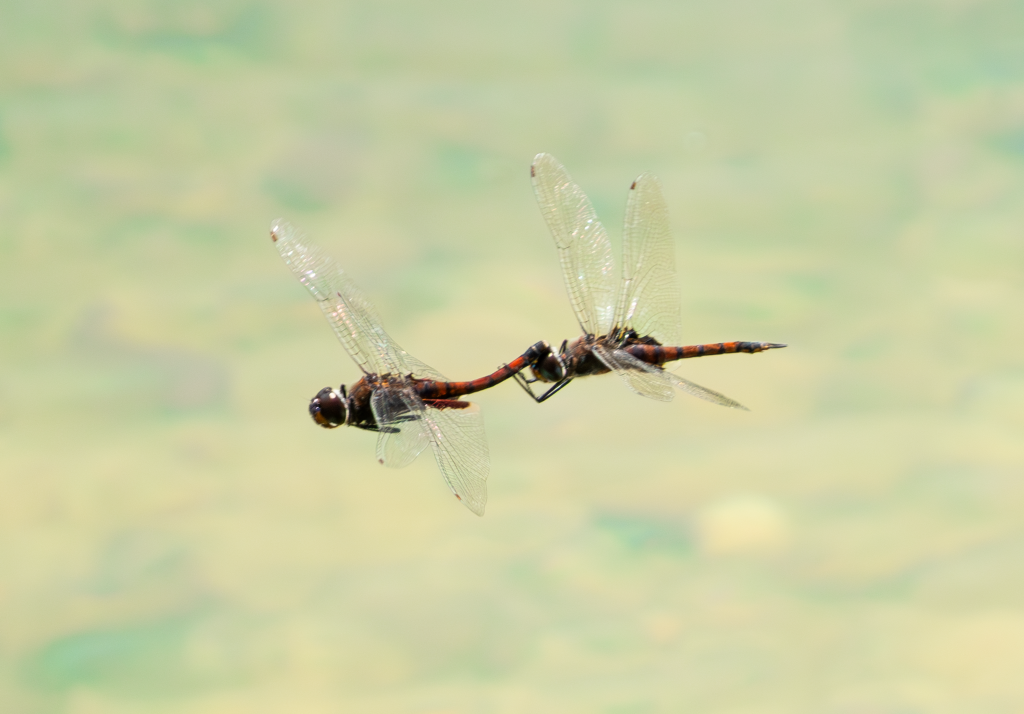
This image captures a tandem pair of dragonflies in flight, a behavior associated with mating. The use of approximately 600mm focal length compresses the background, isolating the subjects against a smooth green field created by distant vegetation. A shutter speed of around 1/2000s was sufficient to maintain body sharpness while allowing minimal wing blur. The success of this frame lies in anticipating the pair’s repeated flight path and positioning accordingly.
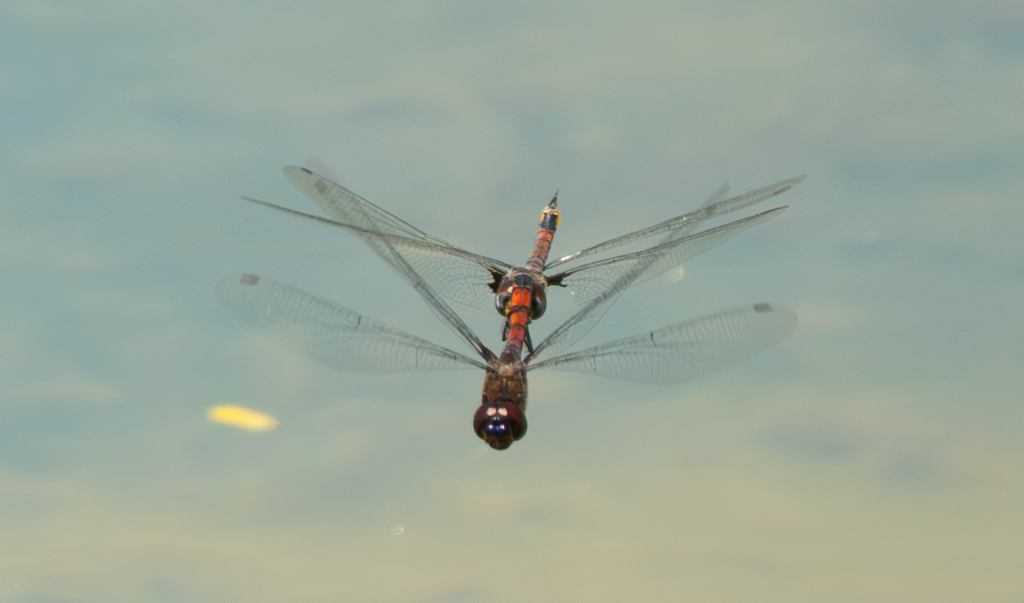
A head-on composition presents one of the highest levels of difficulty in dragonfly photography. At 600mm, depth of field becomes extremely limited, and focus must align precisely with the head of the insect. A faster shutter speed of approximately 1/2500s was used to ensure clarity. This image represents a low-probability success scenario, where multiple failed attempts typically precede a single usable frame.
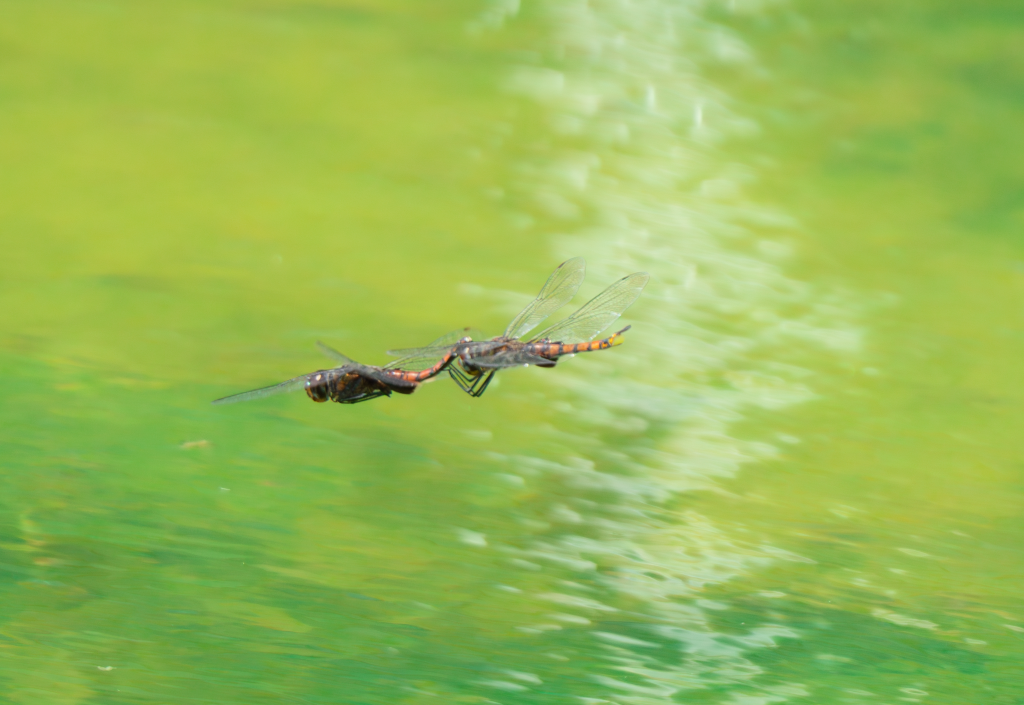
In this frame, the tandem pair is photographed flying low over water. The reflective surface contributes to a uniform green background, enhancing subject separation. The slightly slower shutter speed of around 1/1600s introduces subtle motion in the wings, which adds a dynamic quality to the image without compromising overall sharpness.
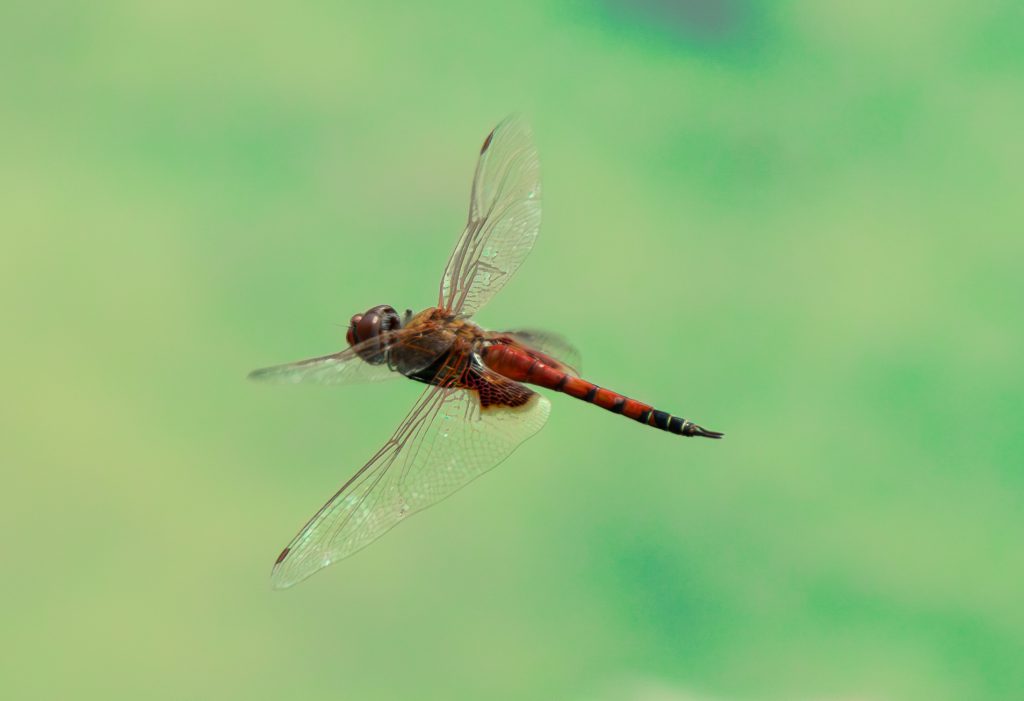
Captured using the Tamron 500mm lens, this image demonstrates a single dragonfly in lateral flight. The reduced focal length, compared to 600mm, provides slightly more manageable framing and tracking. Focus is placed on the thorax, ensuring that the majority of the body remains sharp. The aperture of approximately f/5.6 allows for sufficient light while maintaining acceptable depth of field.
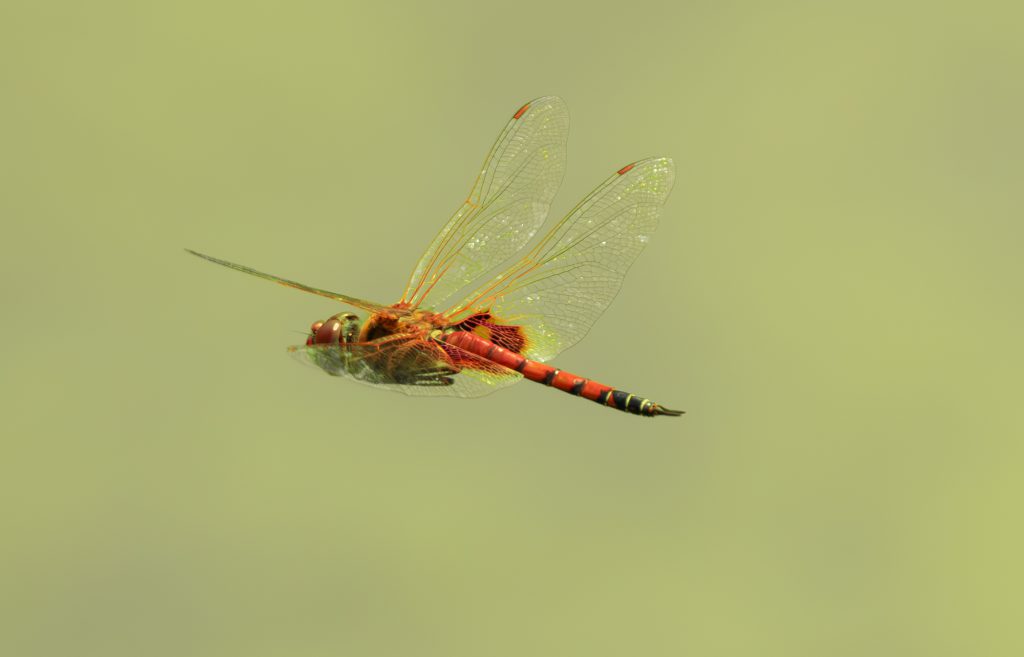
This frame emphasizes wing detail, achieved through a higher shutter speed of approximately 1/3200s. The increased ISO required for this setting introduces some noise but is justified by the clarity of the wing structure. Light passing through the wings reveals intricate venation patterns, which are often lost at lower shutter speeds.
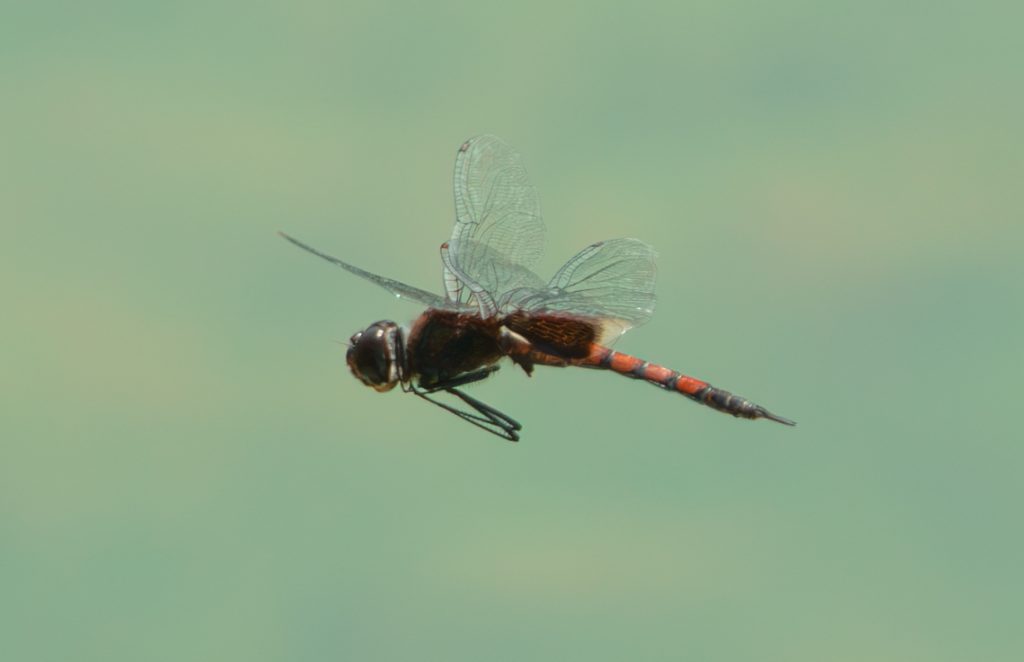
At closer subject distance, depth of field becomes critically shallow. This image required precise focus control, as even minor deviations result in noticeable softness. The use of f/7.1 slightly extends the depth of field, improving the likelihood of capturing a fully sharp subject.
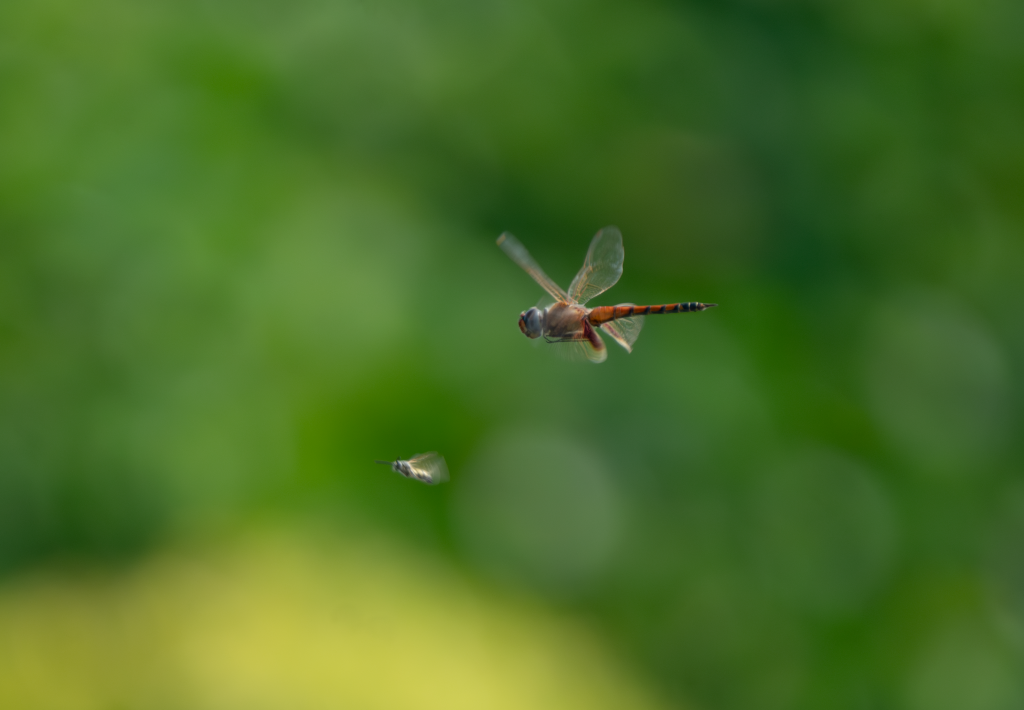
This frame intentionally retains motion blur in the wings, using a shutter speed closer to 1/1250s. While technically less “sharp,” the image conveys a stronger sense of movement. Such frames are important in providing a more complete representation of dragonfly flight behavior.
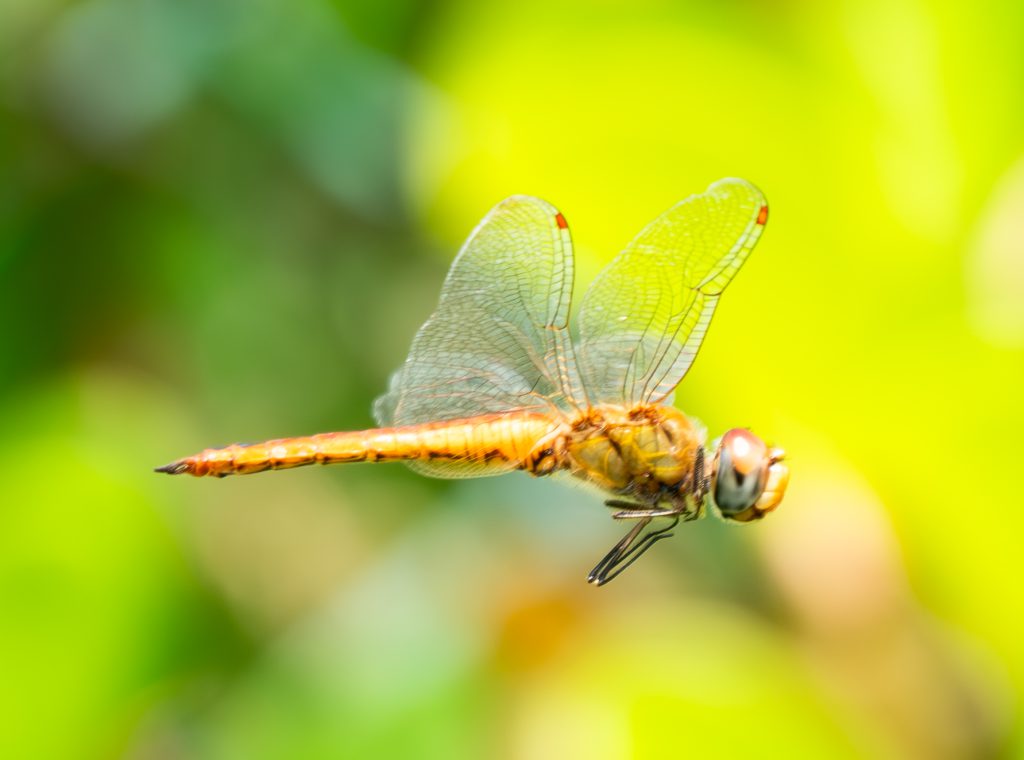
This image benefits from strong, directional light, enhancing both color and detail. The higher shutter speed ensures that both body and wings are rendered sharply, while the aperture maintains adequate depth of field for close-range shooting.
Discussion
The results presented in this study demonstrate that high-level wildlife photography is not solely dependent on advanced equipment. While modern cameras provide significant advantages in autofocus and tracking, they do not replace the need for understanding subject behavior and environmental context.
In the case of dragonflies, success is largely determined by the ability to predict movement, control positioning, and execute timing with precision. The limitations of the Sony A7R II, rather than being a barrier, serve to emphasize the importance of these fundamental skills.
I am Hussain Niyaz, a wildlife photographer from the Maldives. I work professionally as a graphic designer, while my primary focus is documenting the lesser-known biodiversity of my country. My photography is not commercial in nature, and I operate independently without the backing of a photography business. I use equipment that I have personally purchased within my means, yet I remain committed to producing meaningful work and long-term biodiversity documentation through my platform, dhiveshi.info.
Conclusion
Photographing dragonflies in flight remains one of the most demanding challenges in field photography. The images presented here were captured using an older camera system and mid-range telephoto lenses, yet they demonstrate that meaningful and technically strong results are achievable through careful observation and disciplined technique.
This work forms part of a broader effort to document biodiversity in the Maldives through dhiveshi.info, with the aim of contributing to awareness and long-term visual records of local species.

